Time Period Governance: Locking & Approvals
Client
7pace | Appfire
Role
Lead Product Designer
Year
2025
Context
7pace is a time tracking product used by engineering and operations teams inside Azure DevOps, Jira, and monday.com. At scale, teams had a structural problem: there was no concept of a closed time period. Entries could be edited indefinitely, which sounds flexible but creates real problems for billing, reporting, and compliance.
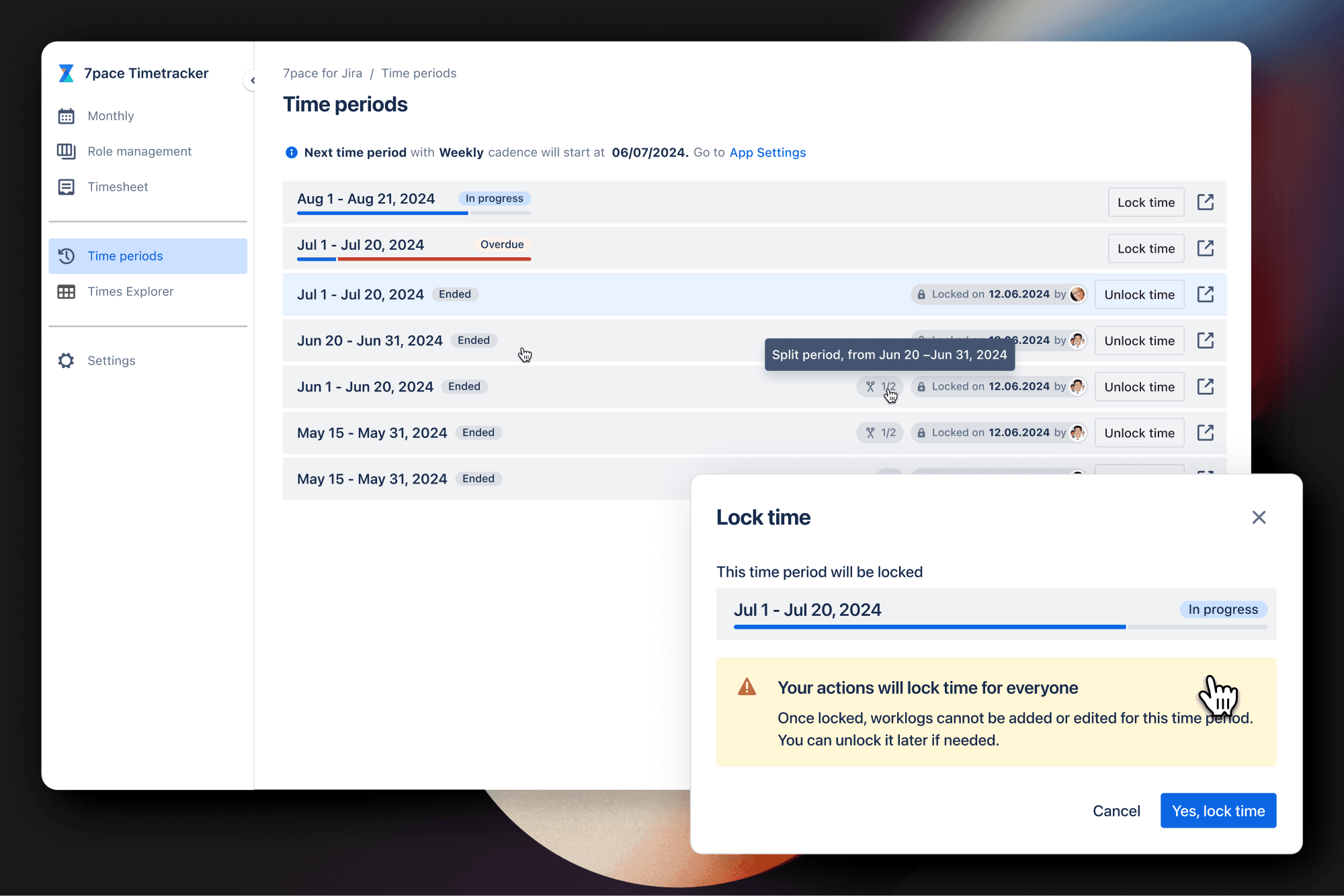
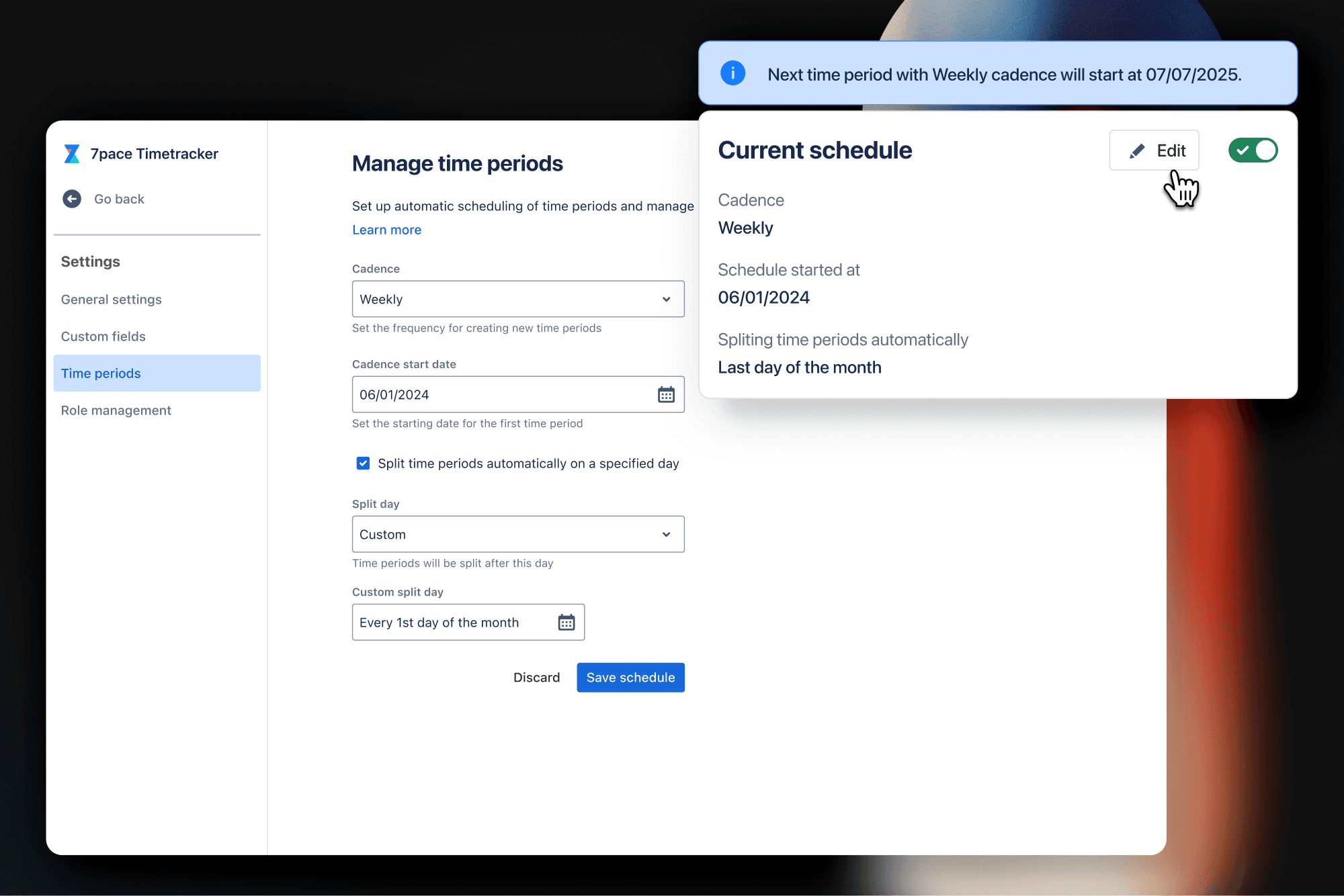
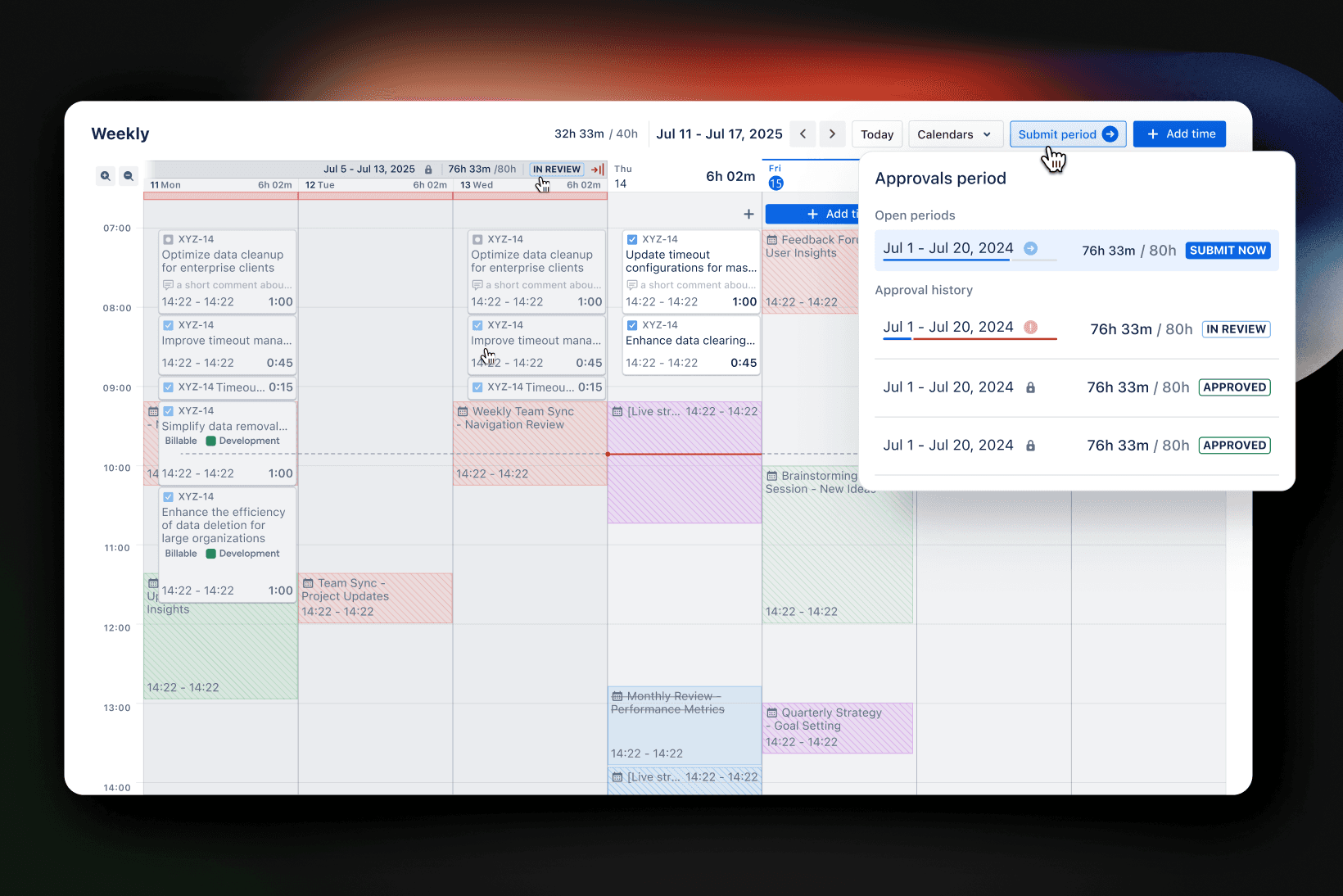
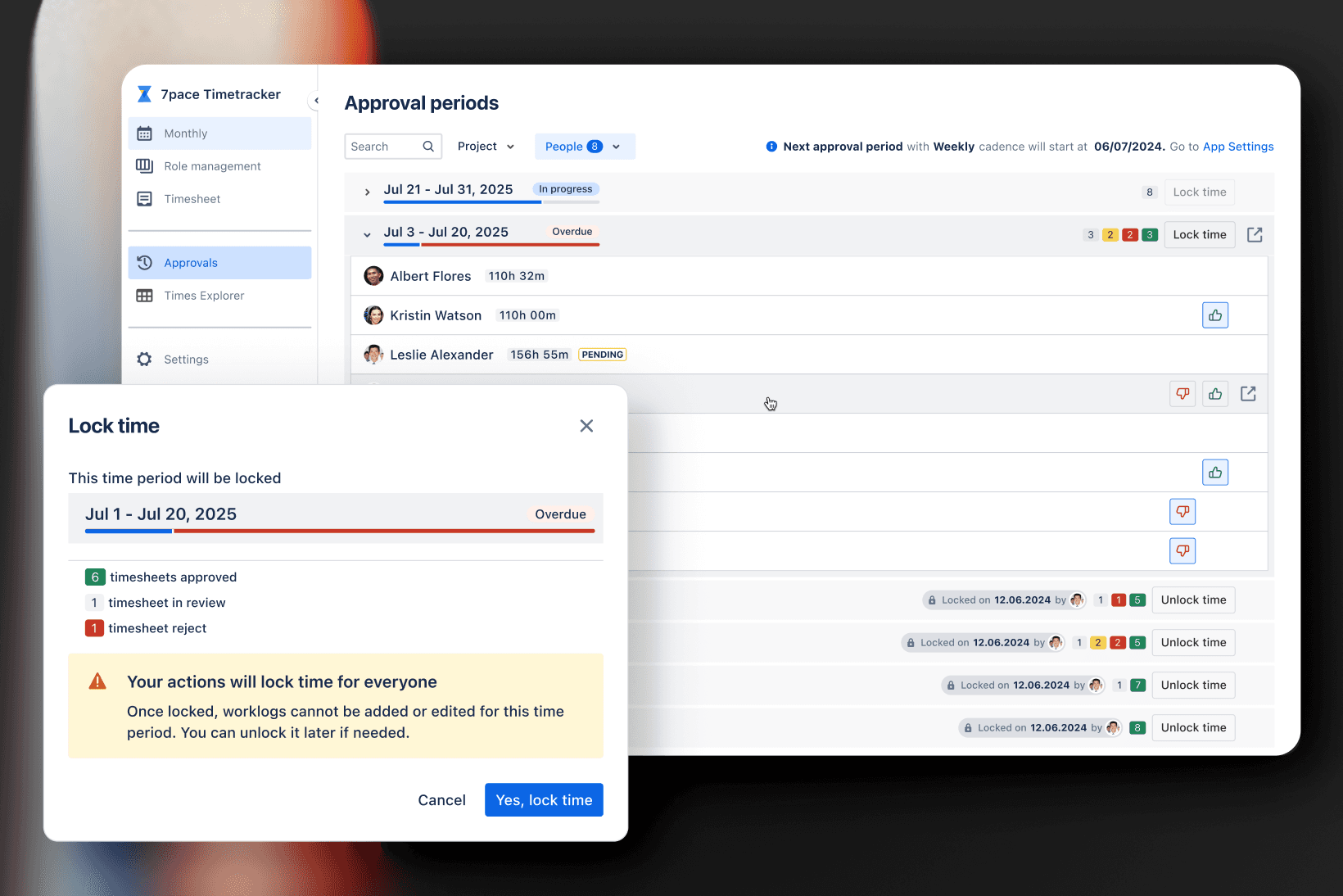
I led the design of a governance layer covering period states, submission flows, and manager approvals, giving organizations control over when time data could still be changed and when it was final.
Problem
Without period-level controls, data integrity was always in motion. Managers could not lock a billing cycle without chasing down individuals. Contributors had no clear signal for when "late" actually meant anything. Reporting teams were pulling numbers from a moving target.
The problem was not technical. The product simply had no concept of finality, and at the enterprise tier that is a deal-breaker.
Concept
The core design challenge was introducing control without making daily logging feel like compliance work.
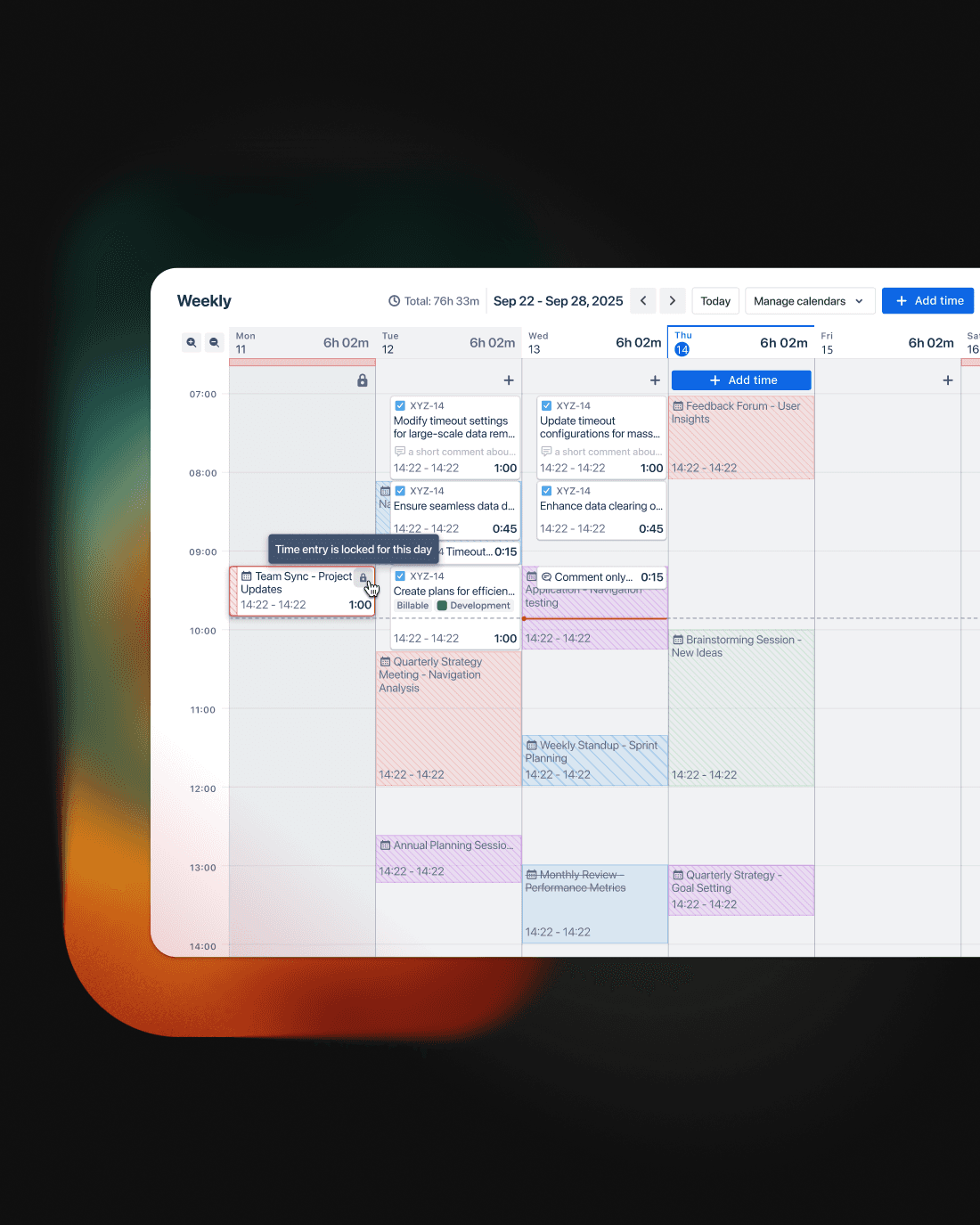
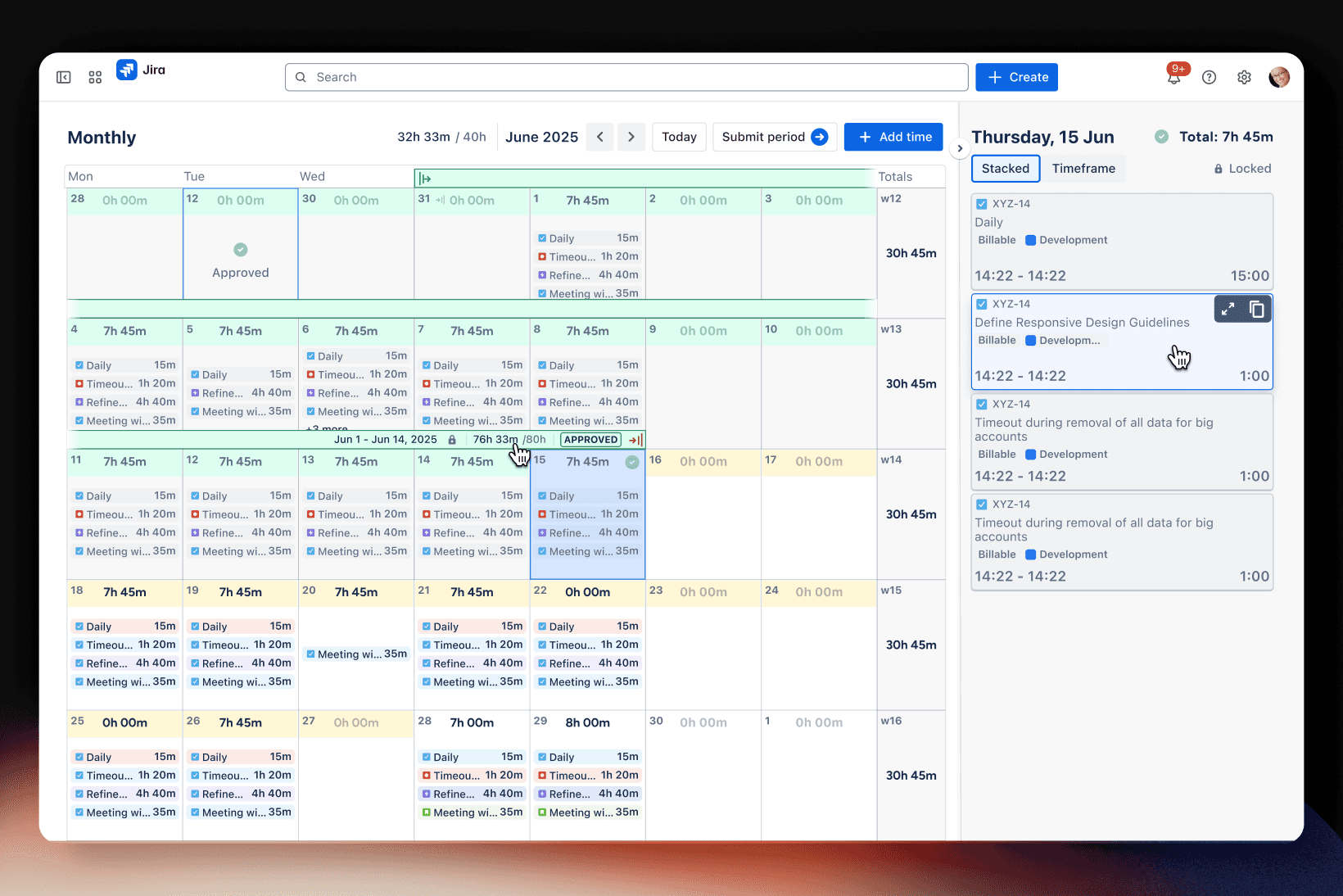
I designed a period state model covering open, submitted, under review, and locked states, where the right actions surface at the right time based on role and period status. Contributors see clear signals about what is still editable. Managers get visibility, approval controls, and an audit trail without needing to chase anyone.
Designing across three platforms meant the logic had to be platform-agnostic while the interactions stayed native to each environment. The challenge was not building the feature once. It was keeping it coherent three times over.
Outcome
Locking and approvals gave enterprise teams a reliable way to finalize time data and produce auditable records. It reduced the informal back-and-forth at period close and repositioned the product from "time logger" to "time governance system," which mattered for enterprise sales conversations.
It also created the structural foundation for downstream features: billing integrations, compliance exports, and scalable approval workflows.