Calendar-Based Time Tracking
Services
Product Design | UX System Thinking | Validation & Optimization
Client
7pace | Appfire
Role
Lead Product Designer
Year
2025
Context
One of the most persistent problems in time tracking is that it asks people to do something humans are genuinely bad at: accurately reconstruct what they did and when, usually hours or days after the fact.
I designed a calendar-integrated logging experience for 7pace that reframes the problem. Instead of building a record from memory, you are confirming what already happened.
Problem
Users were reconstructing their days from scratch. By end of day or end of week, the detail was already gone, resulting in rounded entries, missing context, and data that did not reflect actual work.
Not because people did not care. Because the tool made accurate logging genuinely effortful. High effort with low motivation leads to low adoption.
Concept
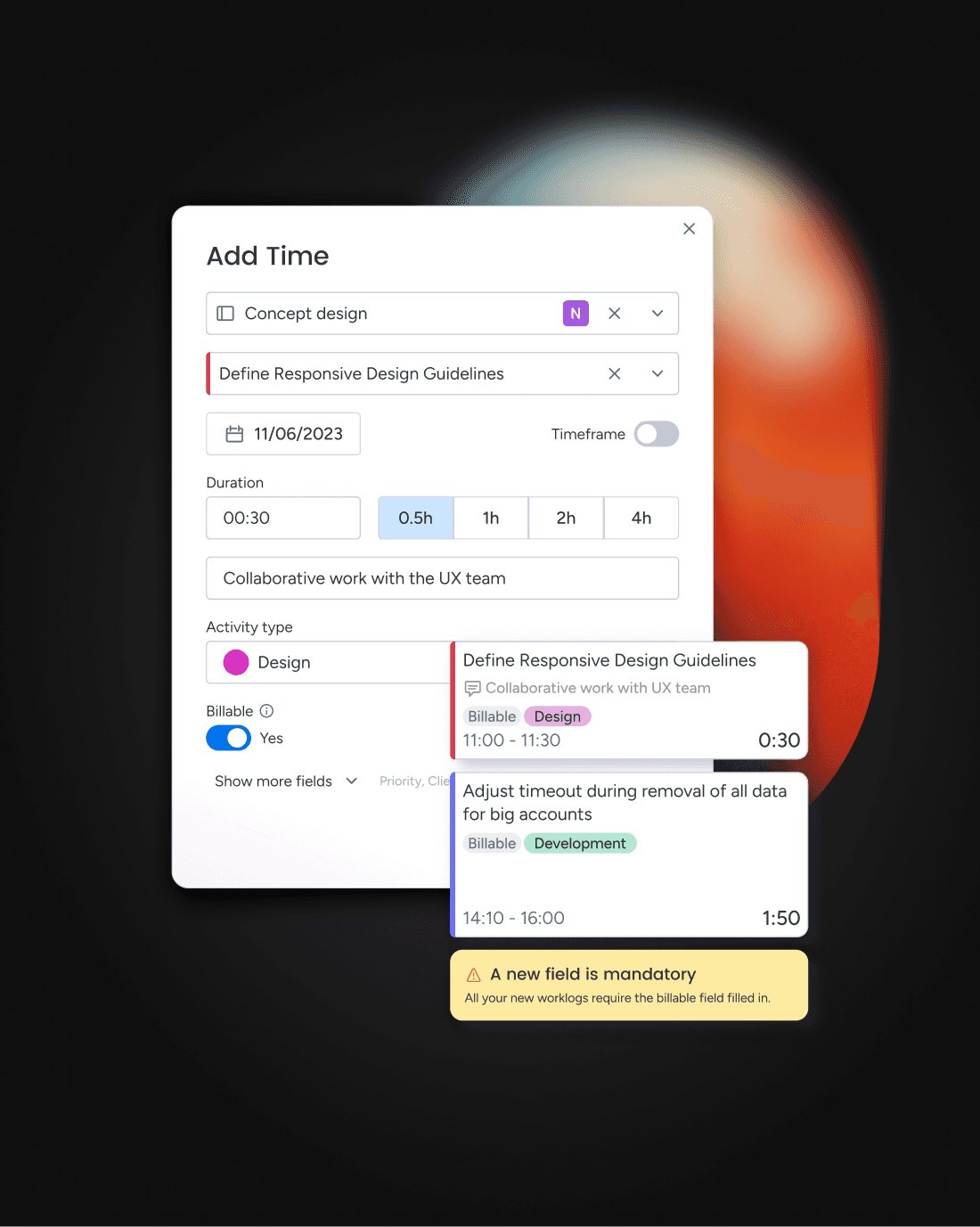
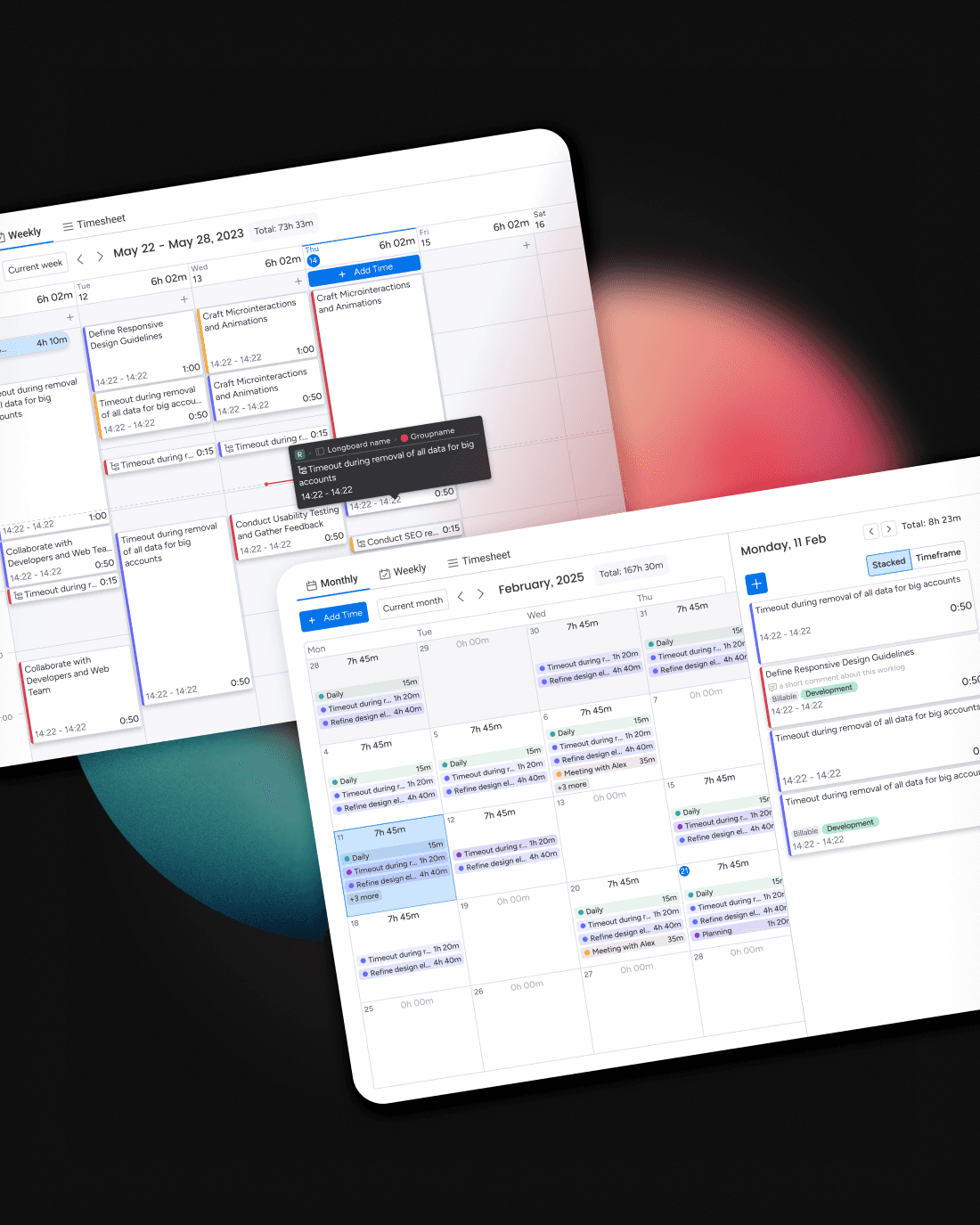
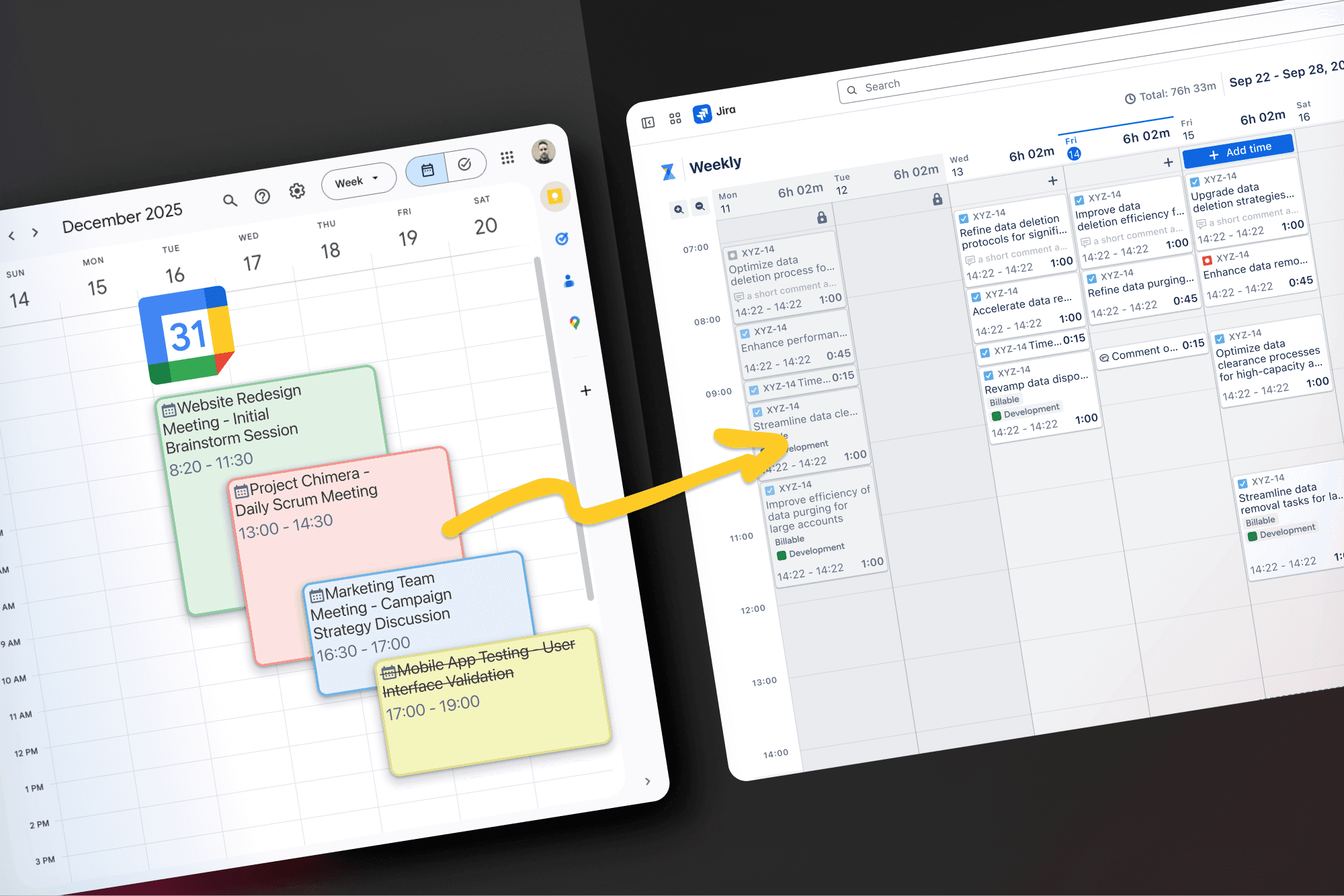
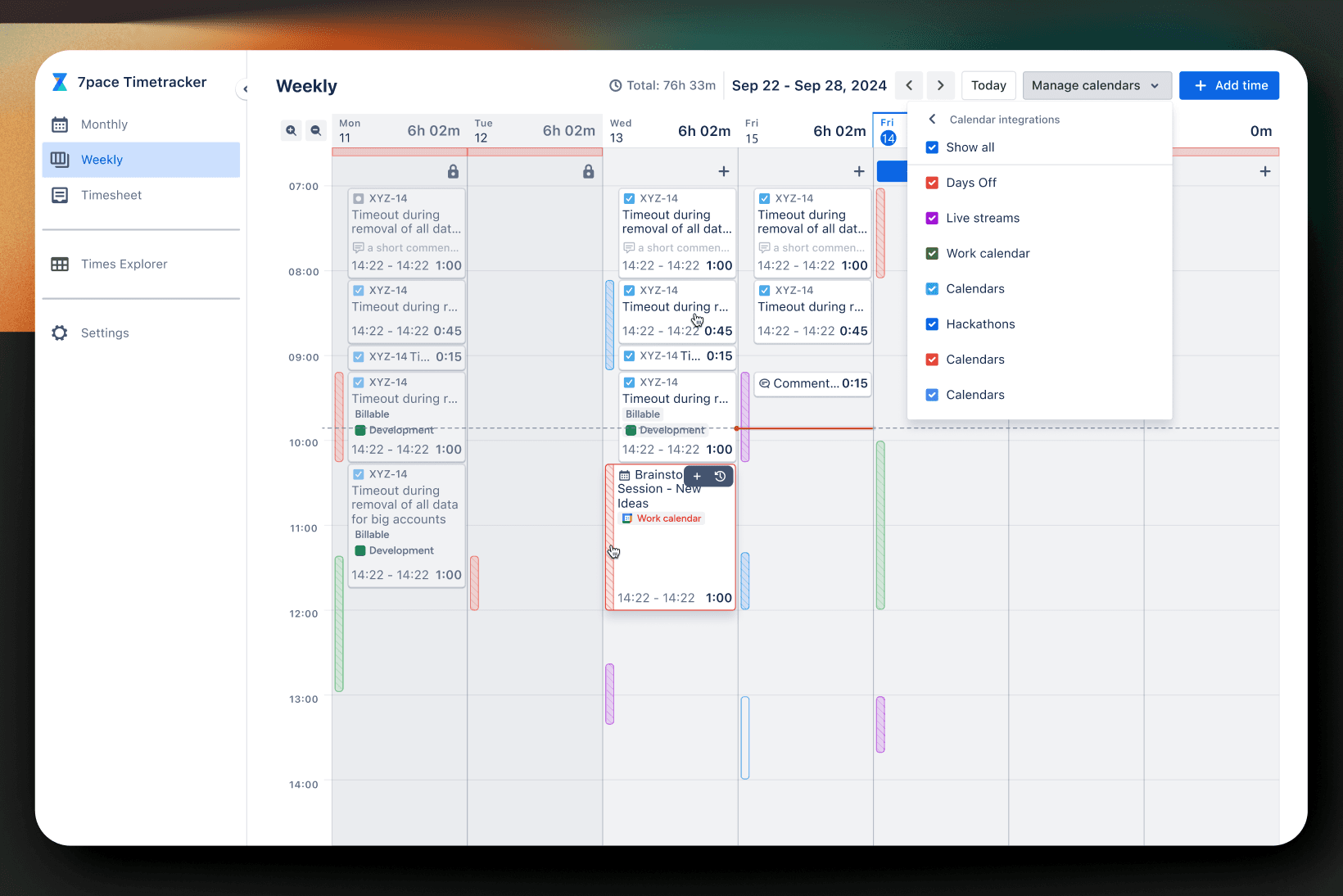
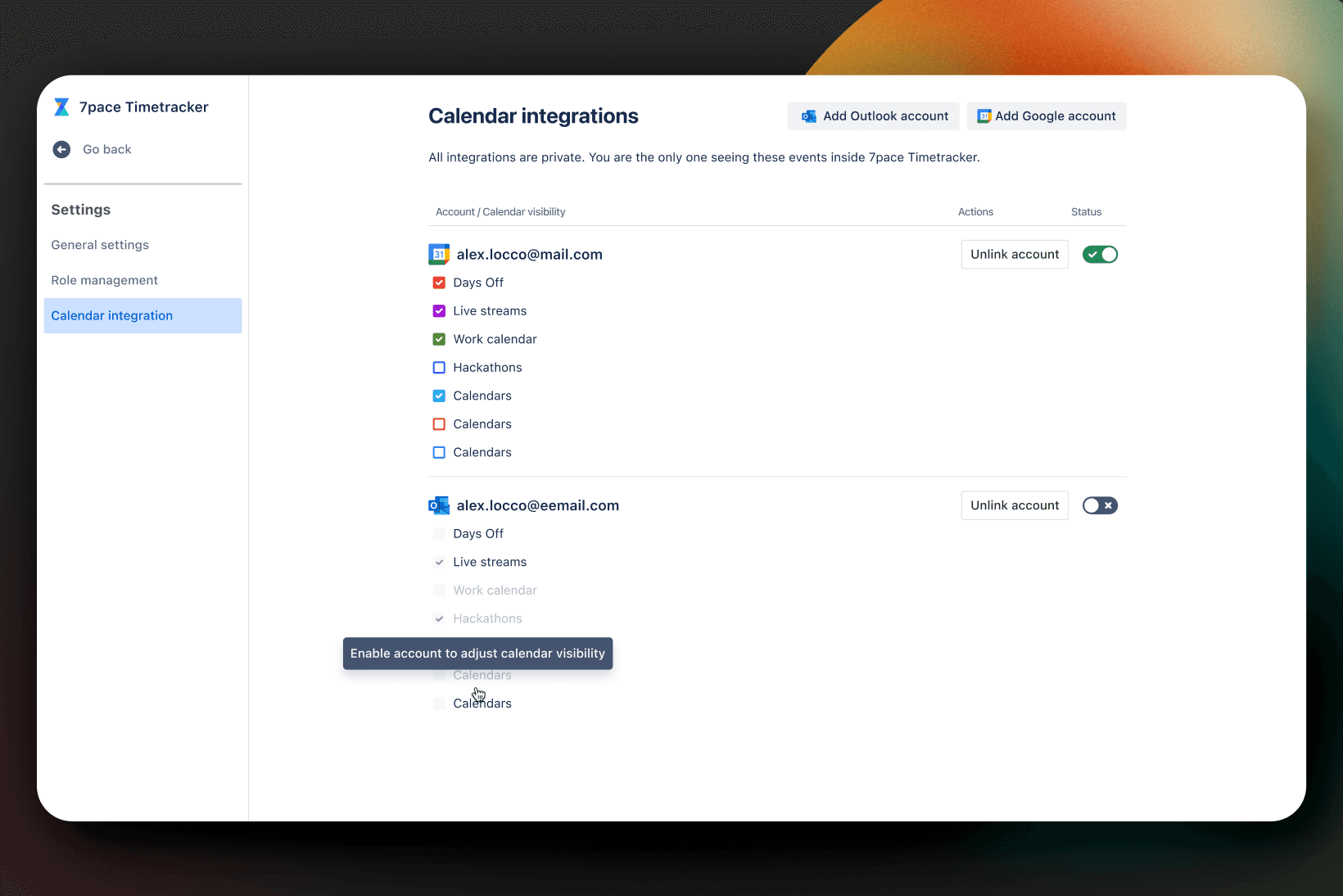
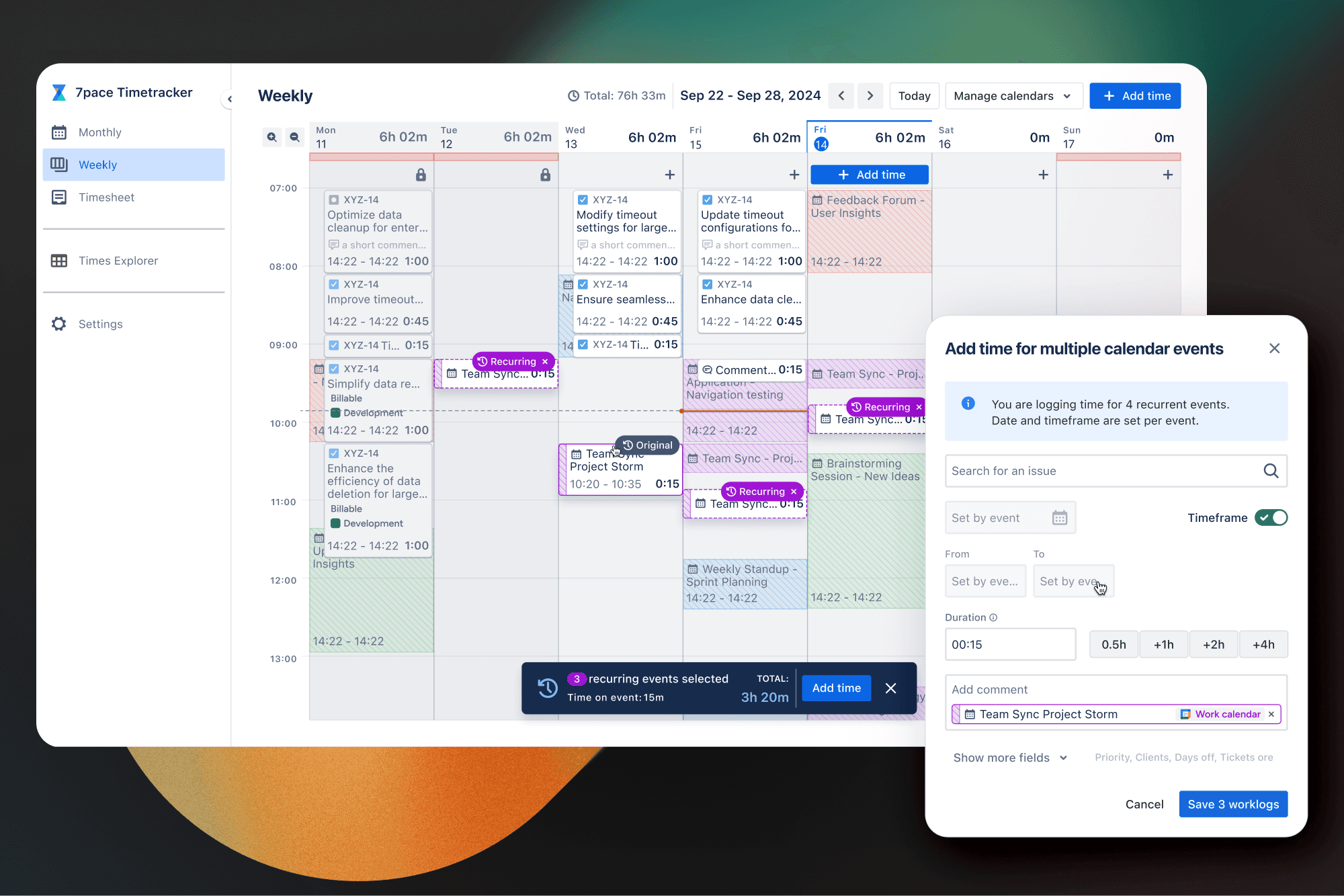
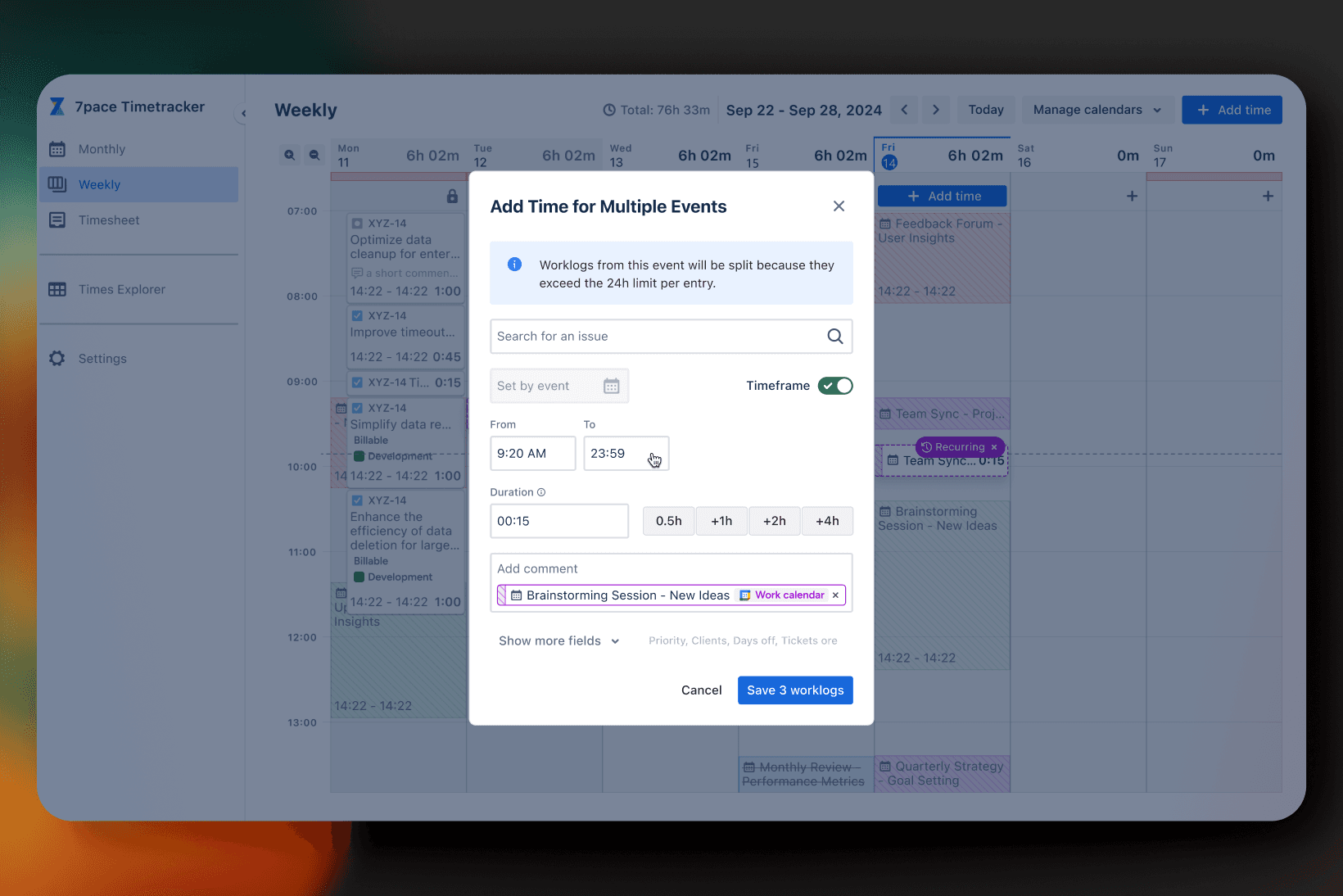
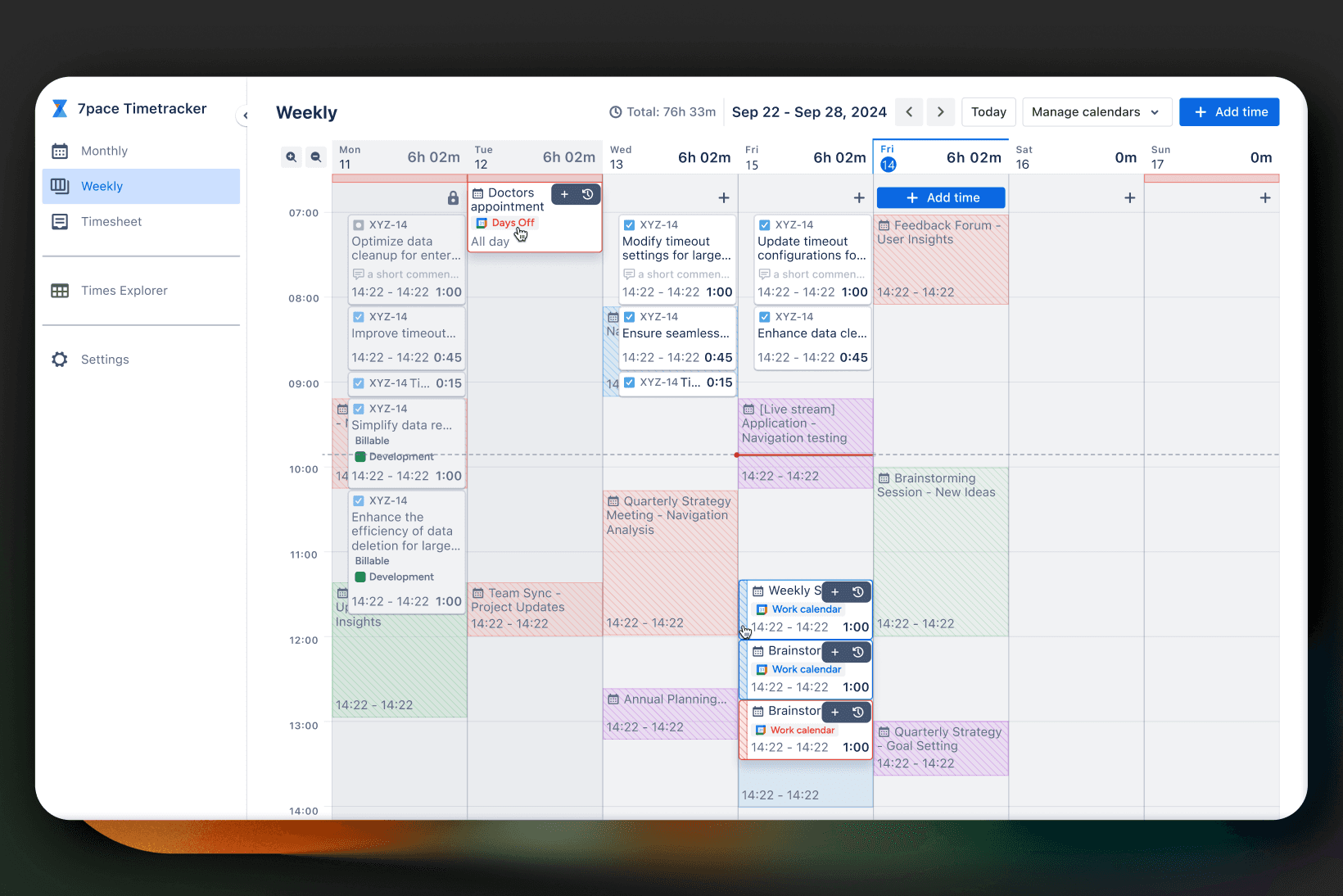
The shift from recall to recognition was the central design decision. Calendar events, including meetings, scheduled blocks, and synced activity, appear directly in the logging view. Users review what is already there, convert relevant events into time entries, and edit details inline.
Two main design challenges came up. First, the visual coexistence problem: calendar events and 7pace worklogs needed to live in the same timeline without creating confusion about what was real work versus what was still a suggestion. Clear visual differentiation was essential. Second, the conversion interaction had to feel effortless, not like filling out a form inside another form.
Outcome
Calendar-based logging reduced the cognitive cost of time tracking for daily users. Entries became more granular and accurate without requiring more effort, which is the trade-off that normally kills adoption in time tracking tools.
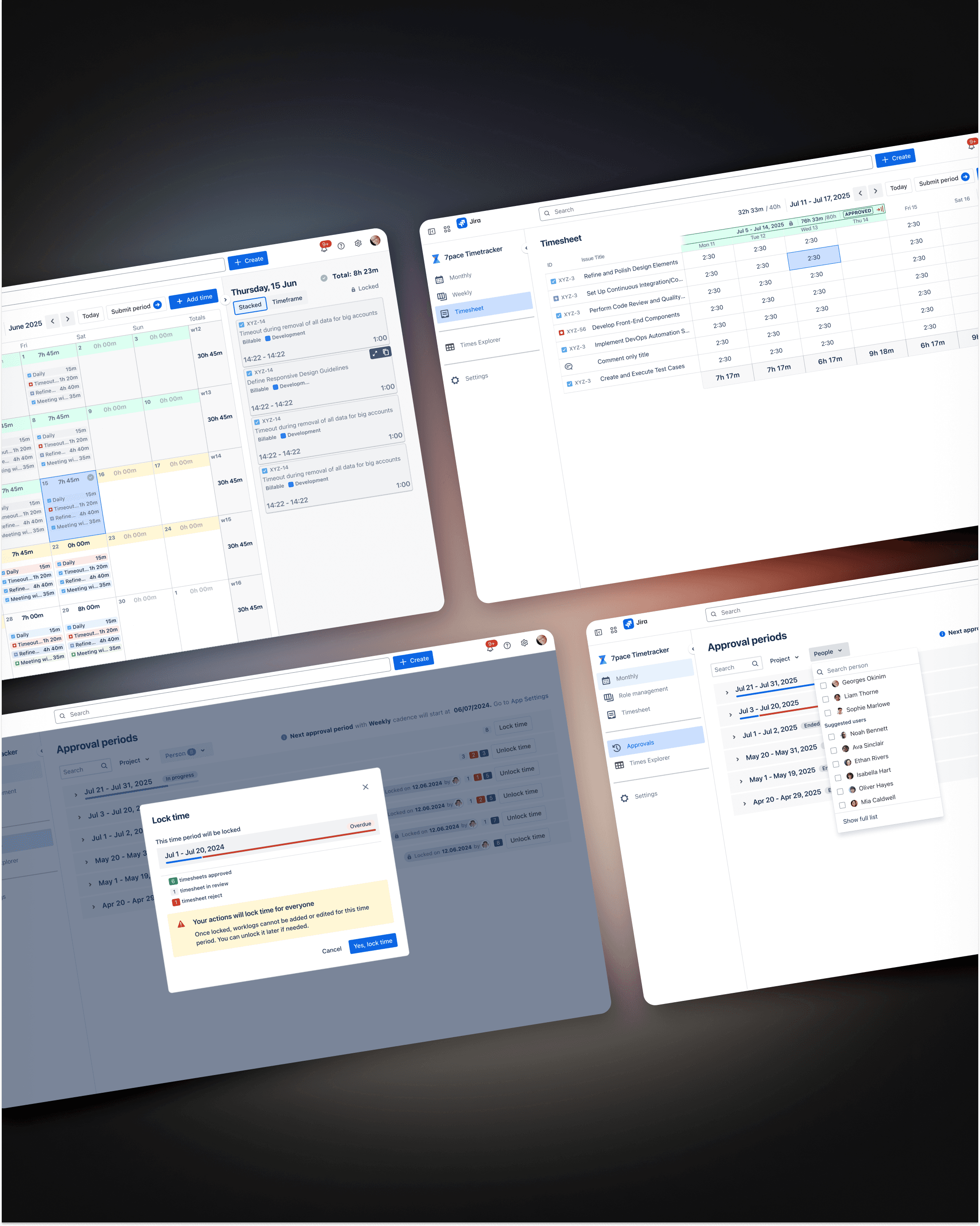
It also established the data reliability needed for downstream features: approvals, automated reporting, and eventually predictive logging.