ExactCare
Client
Cubic Agency
Role
UX Designer
Year
2016
Context
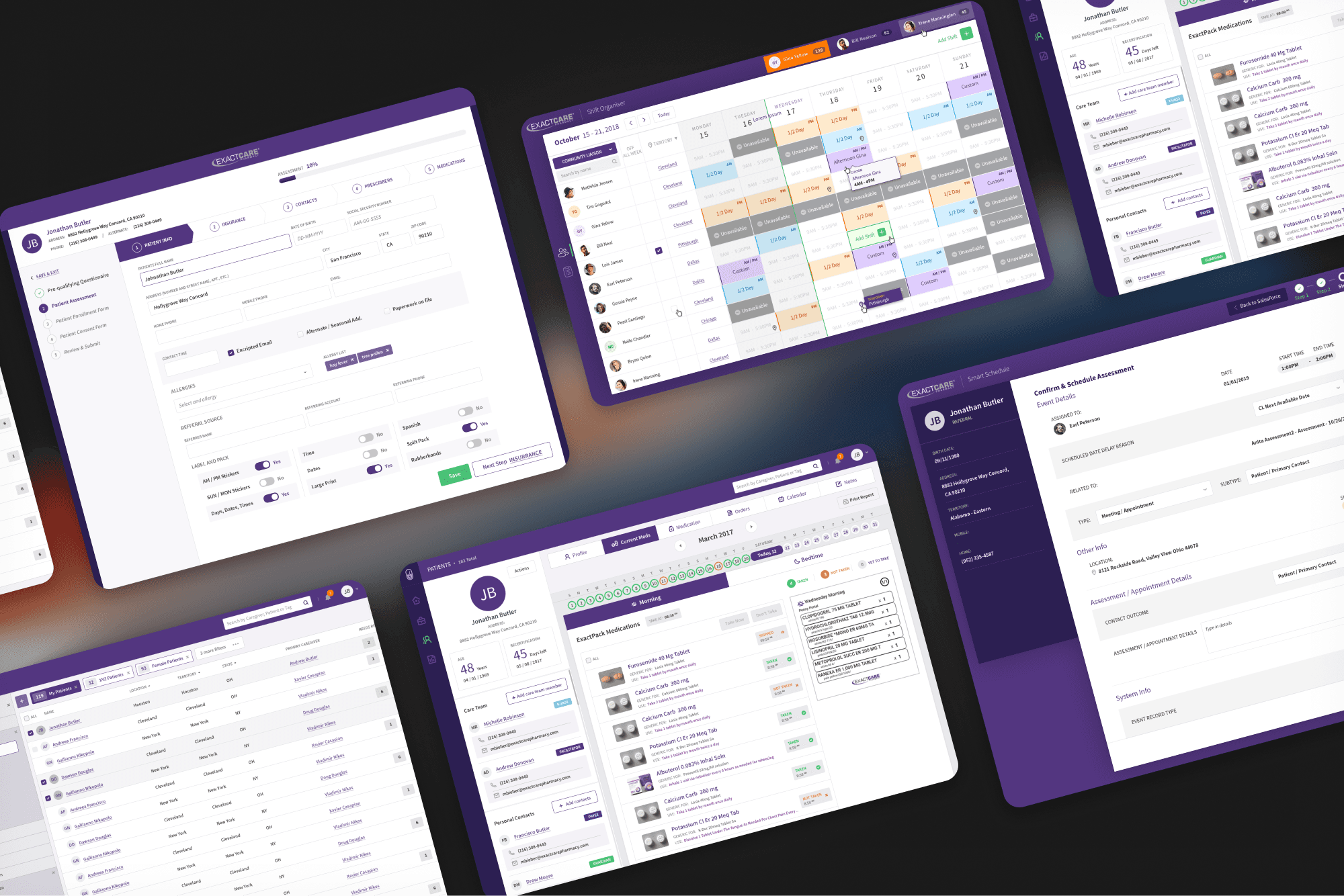
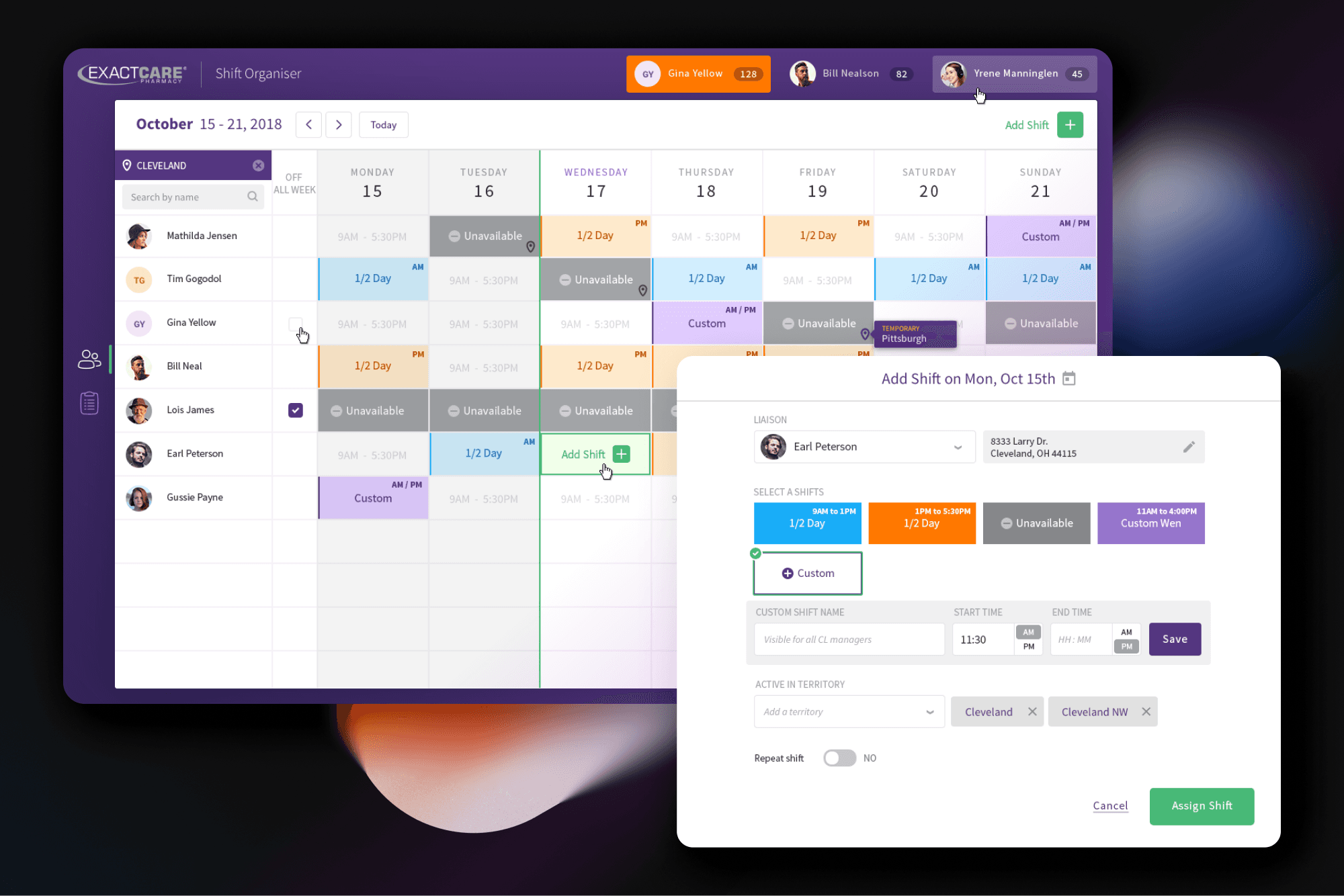
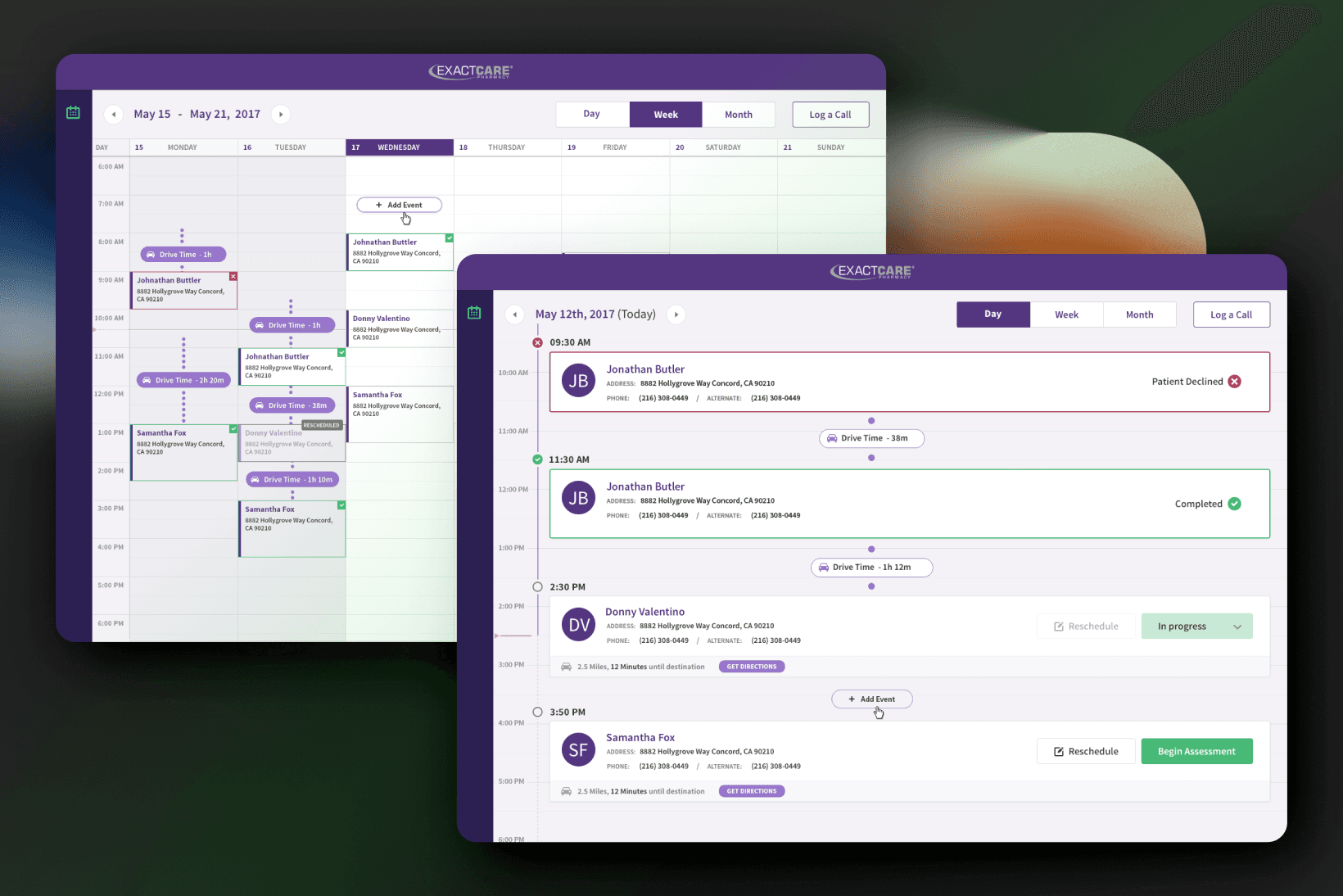
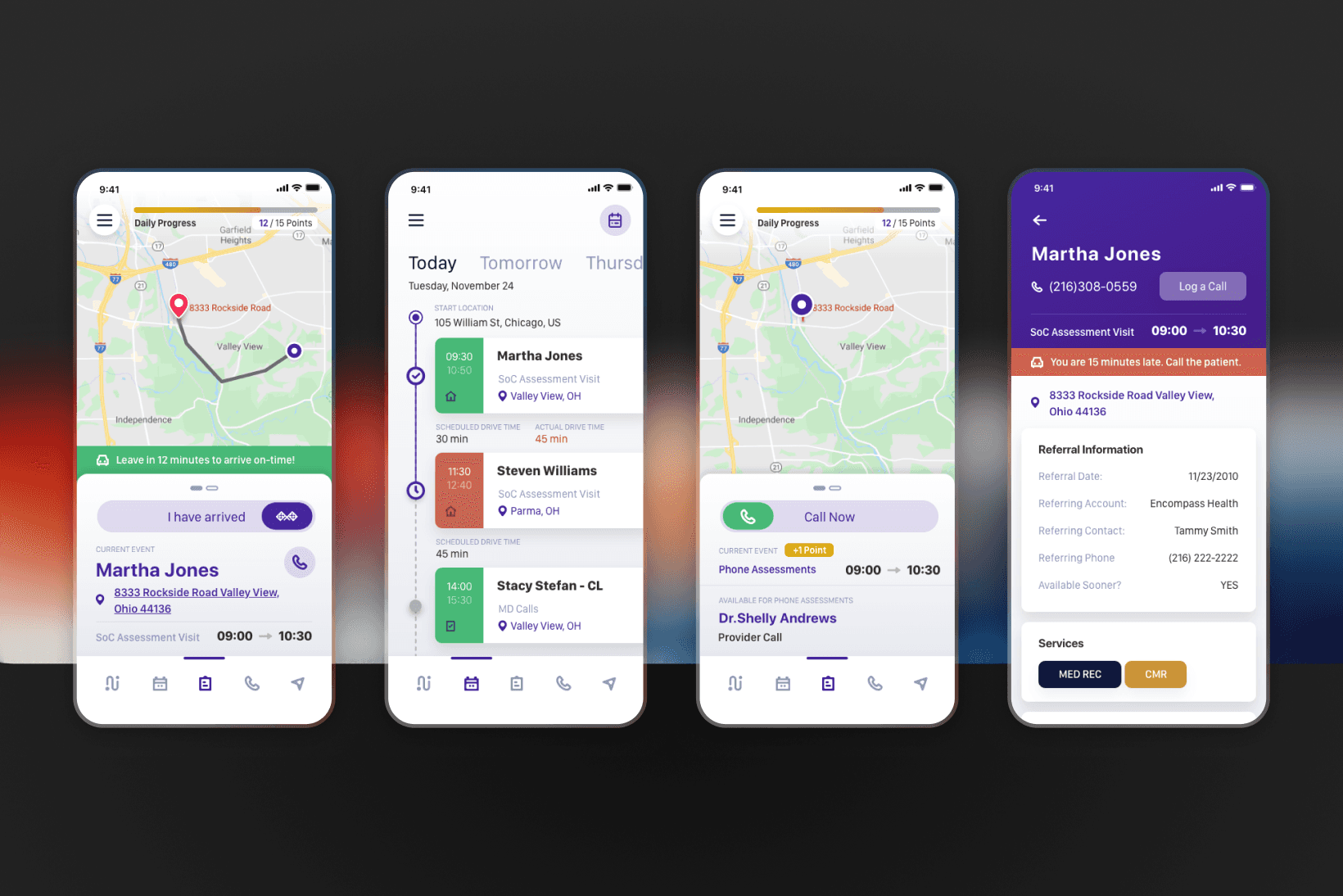
ExactCare is a healthcare and pharmaceutical platform connecting patients, medications, and care teams. I worked on this through Cubic Agency, contributing to both the public-facing marketing experience and two core product surfaces: a patient-facing app across mobile, web, and tablet, and a provider-facing system used by physicians and care teams to manage schedules and patient interactions.
Healthcare is one of the few domains where design errors carry real consequences. The stakes shaped every decision.
Problem
Patient care involves multiple roles, multiple touch-points, and a lot of coordination that typically happens across disconnected tools. Patients trying to manage medication routines have different needs than physicians managing a full schedule of visits. Designing for both without fragmenting the experience further was the core challenge.
When workflows are fragmented, the risk of error goes up and trust in the system goes down. Neither is acceptable in a healthcare context.
Concept
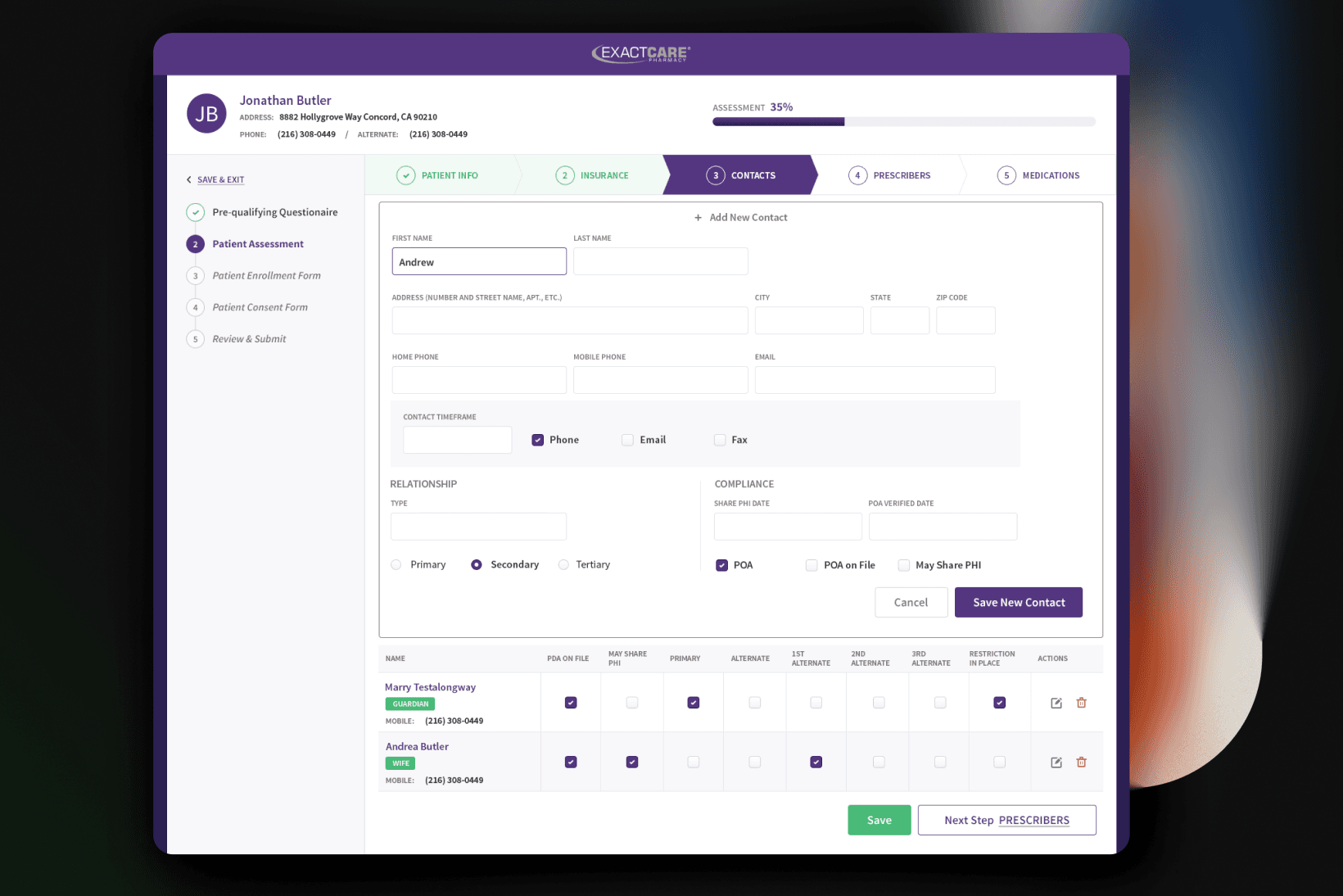
I approached the two surfaces as connected but distinct. For patients, the priority was clarity and low friction: managing medication schedules, understanding routines, and accessing relevant information without cognitive overload. For providers, the priority was structure: scheduling visits, accessing patient context, and supporting care coordination without having to hold everything in memory.
Both surfaces shared a common design principle: clear hierarchy, step-based flows, and consistent patterns across devices. In a domain this complex, consistency is not an aesthetic choice. It is a safety mechanism. Users navigating stressful situations should not have to re-learn how the interface works depending on which device they are on.
Outcome
A more coherent experience across patient and provider touchpoints, with clearer workflows and less reliance on workarounds or external tools for coordination. The design system established a consistent foundation across platforms while staying adapted to the different contexts and needs of each user type.
This was earlier work, from 2016, but it remains one of the projects that shaped how I think about designing for high-stakes, multi-role systems where the user cannot afford to be confused.